Game
Rainbow trout
Oncorhynchus mykiss
How to identify
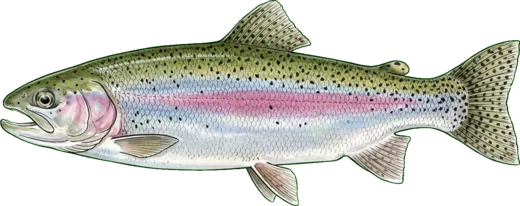
A stocked trout with silvery to olive flanks, a pink or magenta band along the lateral line, and small black spots all over the back, the dorsal fin and the tail (brown trout have few or no spots on the tail and have red spots). Adipose fin present. Fresh stockies often have worn fins.
Easily confused with
Brown trout (red spots, plain tail), sea trout (silver, few spots, no pink band) and the occasional blue trout or golden trout, which are colour strains of rainbow sold to fisheries.
Habitat
A North American species introduced to Britain in the late 1800s. Almost all UK rainbows are farmed fish stocked into put-and-take stillwater trout fisheries and big reservoirs, plus a few rivers below fish farms or stocked club stretches. They rarely breed successfully here, so populations depend on stocking (a handful of self-sustaining waters exist, such as parts of the Derbyshire Wye).
Where in the UK & Ireland
Commercial trout lakes in every region, and the big water-company reservoirs: Rutland Water, Grafham Water, Pitsford, Draycote, Chew Valley and Blagdon, Bewl Water, Hanningfield, Farmoor, Carsington and the South West Lakes reservoirs. Many Scottish and Irish put-and-take fisheries too.
Season & close season
Rainbow trout have no statutory close season in England and Wales, so many stillwaters fish all year (the fishery sets its own dates; reservoirs often open from March to the end of October or November). Scotland and Ireland: check the fishery.
Best baits
Lures (blobs, boobies, Cats Whiskers, Minkies), nymphs and buzzers (Diawl Bach, Hare's Ear, epoxy buzzers), dry flies such as hoppers and Shipman's in summer. Some fisheries allow spinning or bait (powerbait, worm) on separate any-method lakes.
Rigs & methods
Stillwater fly fishing from the bank or a drifting boat: buzzers under an indicator, a team of nymphs on a slow figure-of-eight retrieve, pulling lures on sinking lines when fish are deep or freshly stocked, and dries on calm summer evenings.
Tackle
A 9-10 ft #6-7 fly rod with floating and intermediate lines (sinking lines on reservoirs), 6-8 lb fluorocarbon leader, a landing net and a priest if you keep your bag.
Watercraft
Freshly stocked rainbows shoal up and chase lures; older fish settle into a routine and feed on buzzers. Fish the windward bank where food is blown, look for fish rising in wind lanes and find the depth they are feeding at by counting your line down.
Conservation & the law
Most fisheries sell catch-and-kill tickets with a bag limit, and some offer catch-and-release; follow the rules, and stop fishing once your bag is reached. Rainbows are non-native: never move or release them into another water. In England and Wales anglers aged 13+ need a rod licence (Environment Agency / Natural Resources Wales) as well as permission from the fishery.
Species Hunt tip
The easiest game fish to tick: book a day ticket at a stocked trout lake, fish a buzzer under an indicator or strip a small lure, and you should catch.
How the Species Hunt works →Where to catch rainbow trout
Best rainbow trout venues & rivers in the UK →
Reported at reported
LakeAldin Grange Lakes
Durham, England
 Lake
Altnahinch
Ballycastle, Northern Ireland
LakeBake Lakes, Cornwall
Cornwall, England
LakeBessy Beck Trout Fishery
Newbiggin on Lune, England
LakeBewl Water, Kent
Kent, England
LakeBinevenagh Lake
Limavady, Northern Ireland
LakeBlagdon Lake, Somerset
Somerset, England
LakeCarsington Water, Derbyshire
Derbyshire, England
LakeCastlewellan Forest Lake
Castlewellan, Northern Ireland
LakeChew Valley Lake, Somerset
Somerset, England
LakeClatworthy Reservoir, Somerset
Somerset, England
LakeCopeland Reservoir
Carrickfergus, Northern Ireland
LakeCorranny Lake
Clones, Northern Ireland
LakeCraigavon City Park Lake - North
Craigavon, Northern Ireland
LakeCreevy Lough
Saintfield, Northern Ireland
LakeDraycote Water, Warwickshire
Warwickshire, England
LakeEglwys Nunydd, Port Talbot
Port Talbot, Wales
LakeEyebrook Reservoir, Leicestershire
Leicestershire, England
LakeFarmoor Reservoir, Oxfordshire
Oxfordshire, England
LakeGrafham Water
St Neots, England
LakeHanningfield Reservoir, Essex
Essex, England
LakeHawkridge Reservoir, Somerset
Somerset, England
LakeHillsborough Lake
Lisburn, Northern Ireland
LakeKennick Reservoir, Dartmoor
Dartmoor, England
Rivers & canals where it's likely likely (91 waters)
River Thames
near Greenwich, England · 378 km
River Avon
near Tidworth, England · 262 km
River Welland
near Stamford, England · 142 km
River Aire
near Farsley, England · 140 km
River Wharfe
near Otley, England · 124 km
River Derwent
near Scarborough, England · 122 km
River Test
near Stockbridge, England · 114 km
River Medway
near Crowborough, England · 113 km
River Wey
near Bordon, England · 110 km
Kennet and Avon Canal
near Devizes, England · 106 km
River Derwent
near Darley Dale, England · 105 km
River Avon
near Chippenham, England · 102 km
River Don
near Mexborough, England · 100 km
River Exe
near Bampton, England · 99 km
River Kennet
near Marlborough, England · 98 km
River Stour
near Clare, England · 92 km
River Wensum
near Reepham, England · 77 km
River Frome
near Wareham, England · 77 km
River Windrush
near Burford, England · 62 km
River Evenlode
near Chipping Norton, England · 62 km
River Tone
near Wellington, England · 60 km
River Soar
near Loughborough, England · 59 km
River Tyne
near Prudhoe, England · 57 km
River Tern
near Market Drayton, England · 56 km
Rainbow trout fishing by county
Recent catches
None logged yet.